How to Deep Clean a Bathroom (Top to Bottom)
A complete bathroom deep clean in the right order — ceiling, fan, mirror, shower, toilet, sink, floor. Includes what to use, how long to let cleaners dwell, and the parts most people skip.
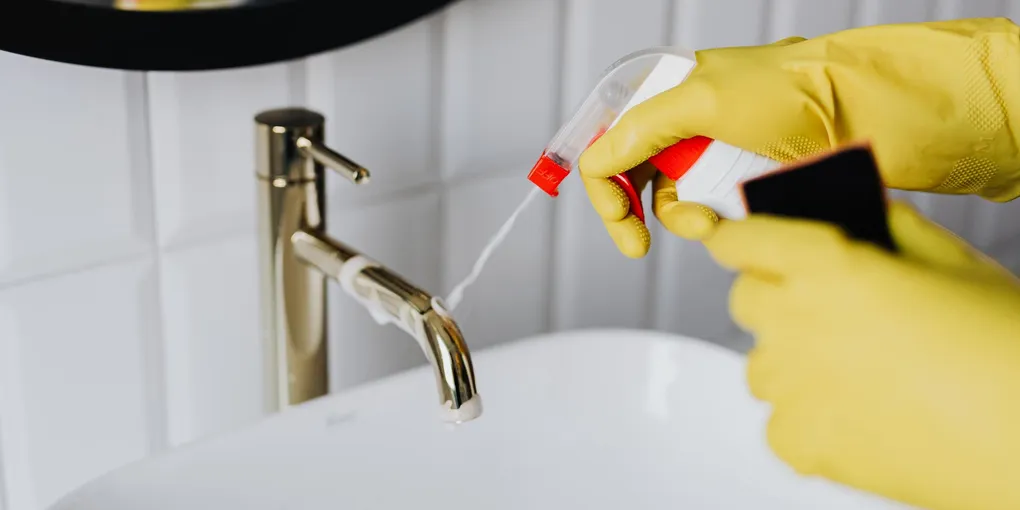
Deep cleaning a bathroom (top to bottom): (1) Apply toilet bowl cleaner under the rim and let it soak while you clean everything else. (2) Spray shower/tub walls with cleaner and let dwell 5–10 minutes. (3) Wipe down the exhaust fan grille, light fixtures, and ceiling corners. (4) Clean the mirror and counter. (5) Scrub the shower walls, grout, and tub — most of the work is already done by the dwell time. (6) Scrub and flush the toilet (bowl, under rim, seat hinges, base). (7) Clean the sink and faucet. (8) Mop the floor last. Total time: 30–45 minutes. Apply cleaners to multiple surfaces at once to let them work while you're elsewhere — sequential cleaning almost doubles the time.
Frequently Asked Questions
How long does it take to deep clean a bathroom?
A thorough bathroom deep clean takes 30-45 minutes for most bathrooms. The biggest time-saver is applying cleaners to multiple surfaces at once (toilet bowl, shower walls, sink) and letting them dwell while you clean other areas. Sequential cleaning — apply, wait, wipe, move on — almost doubles the time.
What order should you clean a bathroom?
Always clean top to bottom: ceiling and light fixtures first, then the mirror, then counter and sink, then shower/tub, then toilet, then floor last. If you clean the floor first, all the debris and spray from higher surfaces falls on it again.
How often should you deep clean a bathroom?
Monthly for a full deep clean. Weekly spot cleaning (toilet bowl, sink wipe-down, mirror) prevents buildup between deep cleans. A 5-minute weekly reset makes the monthly deep clean faster.
What is the best cleaner for a shower?
For tile and fiberglass, a daily shower spray used after each shower is the best preventive. For soap scum buildup, CLR or Kaboom work better than all-purpose cleaners. For mildew and grout discoloration, a bleach-based product (OxiClean, Tilex) is more effective than vinegar, despite what most natural-cleaning guides suggest — vinegar's acidity can also slowly etch grout over time.
How do you clean a bathroom exhaust fan?
Turn off the power at the circuit breaker. Remove the grille cover (usually just pulls down and unclips). Wash the grille in warm soapy water, rinse, let dry completely. Use a vacuum with a brush attachment or a can of compressed air to clean dust from the fan blades and motor housing. Reinstall the grille and restore power. Clean every 6-12 months — a clogged fan doesn't exhaust humidity, which accelerates mold growth.
How do you prevent mold in a bathroom?
Run the exhaust fan for at least 20 minutes after every shower. Leave the shower door or curtain open after showering so the walls and floor dry faster. Squeegee the shower walls after each use. Fix any leaks promptly — even slow drips keep surfaces perpetually damp. Seal grout annually to close the porous surface that mold colonizes.
What bathroom surfaces need to be disinfected vs. just cleaned?
Disinfect high-touch surfaces at least weekly: toilet seat, flush handle, faucet handles, and the door handle (one of the most contaminated surfaces in the house). These transmit illness. For disinfectants to work, they need contact time — most require 30 seconds to 4 minutes of wet contact to kill pathogens; wiping immediately after applying defeats the purpose. Clean but don't necessarily disinfect every time: shower walls, tub, mirror, countertop, and floor. These accumulate soap scum and dirt but are lower transmission risks than the touch surfaces. Increase disinfection frequency when someone in the household has been ill.
How do I deep clean a bathroom tile floor and grout?
Sweep or vacuum first to remove loose debris — wet mopping over grit pushes it into grout lines. Apply a tile and grout cleaner (OxiClean, Zep, or a baking soda paste for natural tile) to the grout lines and let dwell 5-10 minutes. Scrub with a stiff grout brush in short back-and-forth strokes. Mop the tile faces with a floor cleaner appropriate to the tile type (ceramic, porcelain, or stone). Rinse with clean water. For grout that has permanently darkened despite cleaning, a grout colorant sealer restores the appearance and prevents future staining. Seal all grout annually with a penetrating silicone sealer.
Deep cleaning a bathroom (top to bottom): (1) Apply toilet bowl cleaner under the rim and let it soak while you clean everything else. (2) Spray shower/tub walls with cleaner and let dwell 5–10 minutes.
A bathroom deep clean is most efficient when you work top to bottom and let cleaners dwell in multiple places at once. The sequence below lets you apply products to surfaces that need soak time — toilet bowl, shower walls, sink — and clean other areas while they work. Done right, a thorough bathroom takes 30-45 minutes.
What You Need
Cleaners:
- Toilet bowl cleaner (Lysol Power, Lime-A-Way for hard water)
- Disinfecting spray or wipes (Clorox or Lysol)
- All-purpose bathroom cleaner (Simple Green, Method, Seventh Generation)
- Shower/tub cleaner (CLR, Kaboom, or Tilex for mildew)
- Glass cleaner (Windex or vinegar + water)
- Grout cleaner (OxiClean, Zep, or baking soda + hydrogen peroxide)
- Floor cleaner (compatible with your floor type)
Tools:
- Microfiber cloths (several — one for mirror, one for counters, one for toilet)
- Toilet brush
- Grout brush or old toothbrush
- Squeegee
- Mop or steam mop (for tile floors)
- Vacuum or Swiffer (for dust before wet mopping)
- Rubber gloves
Amazon picks:
- OXO Good Grips toilet brush — reaches under the rim
- CLR Bath & Kitchen Cleaner — dissolves calcium and hard water buildup
- Tilex Mold and Mildew Remover — best for grout discoloration in showers
- OxiClean Versatile Stain Remover — grout and tile cleaning
- Microfiber cleaning cloths — streak-free on mirrors, surfaces
- Grout brush set — stiff bristles for tile grout lines
- Daily shower spray — preventive spray after each shower slashes deep clean time
- Squeegee for shower — squeegee walls after each shower
Step-by-Step: Deep Clean in Order
Step 1: Ventilate + Apply Products to Soak
Turn on the exhaust fan. Open a window if possible. Chemical odors concentrate fast in a small bathroom.
Then apply products to the surfaces that need soak time — you’ll clean these after doing everything above:
- Toilet bowl: squirt cleaner under the rim, coat bowl walls, let sit
- Shower walls and tub: spray with shower cleaner, coat grout lines with grout cleaner if discolored
- Sink basin: apply a small amount of all-purpose cleaner or baking soda
Leave all three and move to the top.
Step 2: Ceiling, Light Fixture, and Exhaust Fan
Start at the ceiling. Wipe down any visible dust, mold spots, or cobwebs with a dry microfiber cloth or a duster.
Exhaust fan: Turn off power at the circuit breaker, not just the wall switch (some switches share a circuit). Pull down the grille — it usually clips or snaps off. Vacuum the grille and the fan housing. Wash the grille in soapy water, rinse, let dry. A clogged exhaust fan is the leading cause of bathroom mold — it stops removing humid air, so surfaces stay wet longer.
Light fixture: Wipe the fixture housing with a damp cloth. Remove glass globes if accessible and wash them.
Step 3: Mirror
Spray glass cleaner on the mirror and wipe with a clean microfiber cloth using an S-pattern (not circles — circles spread smears). Get the frame and the mounting hardware, which collect dust.
Check behind the mirror or medicine cabinet for the dust line where it meets the wall. Wipe it.
Step 4: Countertops, Sink, and Faucet
Now clean the counter. Move everything off — bottles, soap dispenser, toothbrush holder — clean each item separately, wipe the surface under it.
Faucet: Hard water spots form around the base and on handles. Wrap a vinegar-soaked cloth around the faucet base for 5 minutes to dissolve calcium. Scrub with an old toothbrush. Polish chrome fixtures with a dry cloth after cleaning — wet chrome water-spots within minutes.
Drain: Remove the drain stopper, clean the stopper body (hair and soap accumulate there), and use a bent wire hanger or hair catcher tool to pull any buildup from the drain throat.
Sink basin: Scrub the basin, paying attention to the area around the drain where staining concentrates. Rinse.
Step 5: Shower and Tub
Return to the shower. The cleaner has been sitting for 10+ minutes.
Tile walls: Scrub with a grout brush or sponge. Pay attention to grout lines — they’re porous and hold mold. For persistent mold discoloration, Tilex or a diluted bleach solution is more effective than vinegar. Let bleach-based products sit 5 minutes before scrubbing.
Showerhead: Mineral deposits clog showerhead holes and reduce pressure. Fill a plastic bag with white vinegar and rubber-band it around the showerhead so the holes are submerged. Leave 30-60 minutes, remove, run hot water to flush.
Shower door or curtain:
- Glass door: spray with glass cleaner or CLR for soap scum, wipe, squeegee
- Fabric curtain: machine wash (most are washer-safe, medium heat)
- Plastic liner: machine wash cold, then hang to dry; or replace ($8-12)
Grout sealing (quarterly): After cleaning, if grout looks clean but keeps staining, apply a penetrating grout sealer with a small brush or applicator. It closes the porous surface that mold and stain penetrate.
Step 6: Toilet
The bowl cleaner has been sitting since Step 1. Now scrub:
- Scrub bowl walls with toilet brush, focusing under the rim and jet holes
- Flush to rinse
- Wipe seat top, seat underside, lid top, lid underside with disinfecting wipe or spray
- Wipe exterior of tank, flush handle, bowl base, and the floor immediately around the base (aerosol from flushing lands here)
Full detail on toilet cleaning: How to Clean a Toilet.
Step 7: Floor — Last
Now the floor. Everything dropped during cleaning is on it.
- Remove bath mat
- Sweep or vacuum (catches hair before mopping)
- Mop with appropriate cleaner for your floor type:
- Ceramic/porcelain tile: diluted all-purpose cleaner or Pine-Sol
- Vinyl tile/plank: water + a splash of dish soap (avoid harsh chemicals that dull the finish)
- Natural stone: stone-specific cleaner only — do NOT use vinegar or bleach on marble/travertine
- Pay attention to where the floor meets the toilet base, vanity, and tub — staining and mildew concentrate in these seams
- Rinse mop, do a clean water pass if the floor looks streaky
Wash the bath mat (machine wash, medium heat, tumble dry low or air dry).
Step 8: Final Pass
Put everything back. Reload the toilet paper, replace the soap dispenser and toothbrush holder.
Do a quick visual check for any streaks on the mirror or missed spots on the toilet exterior.
Monthly vs. Weekly Cleaning
| Task | Weekly | Monthly (Deep Clean) |
|---|---|---|
| Toilet bowl scrub | ✓ | ✓ |
| Toilet seat wipe | ✓ | ✓ |
| Sink and faucet | Quick wipe | Full scrub + drain clean |
| Mirror | ✓ | ✓ |
| Countertop | Wipe down | Remove everything, clean under |
| Shower walls | Spray + squeegee | Full scrub + grout focus |
| Shower curtain/liner | — | Wash or replace liner |
| Floor | Sweep | Mop |
| Exhaust fan | — | Every 6 months |
| Grout sealing | — | 1-2× per year |
Common Mistakes
Cleaning in the wrong order. Floor before counters means you’re re-dirtying the floor. Always top to bottom.
Wiping disinfectants immediately. Most disinfectants need 30-60 seconds of contact time to actually kill pathogens. Spray and let sit before wiping.
Using vinegar on natural stone. Vinegar is acidic and etches marble, travertine, and limestone. Use pH-neutral stone cleaner only.
Ignoring the exhaust fan. A clogged fan is why mold keeps coming back. Clean it twice a year.
Not sealing grout. Clean grout still gets mold and stains because it’s porous. Seal it annually and stains have nothing to grab.
Related Reading
- How to Clean a Toilet — full deep-dive on the toilet alone
- How to Clean Grout — the method for serious grout staining
- How to Install a Bathroom Exhaust Fan — if your fan is broken or too small for the room
- Small Bathroom Remodel Ideas — when cleaning isn’t enough
- How to Caulk a Bathtub — reseal the tub-wall joint that grows mold
- How to Clean a Shower — tile, glass door, grout, and fixtures in detail
- How to Unclog a Shower Drain — hair clog removal and prevention
- How to Fix a Floor Tile That Is Loose — reattach tiles that clunk underfoot while deep cleaning the floor
- How to Fix a Peeling Bathroom Ceiling — repair bubbling or flaking ceiling paint caused by poor ventilation
- Step-by-Step: Deep Clean in Order
Toilet bowl: squirt cleaner under the rim, coat bowl walls, let sit Shower walls and tub: spray with shower cleaner, coat grout lines with grout cleaner if discolored
- Monthly vs. Weekly Cleaning
| Task | Weekly | Monthly (Deep Clean) | |---
Free: 10-Point Home Maintenance Checklist
Prevent costly repairs with this seasonal checklist. Save hundreds every year by catching problems early.
Your checklist is ready!
Open Checklist →Something went wrong. View the checklist here.